Brand & Product Placement Disclosure Framework

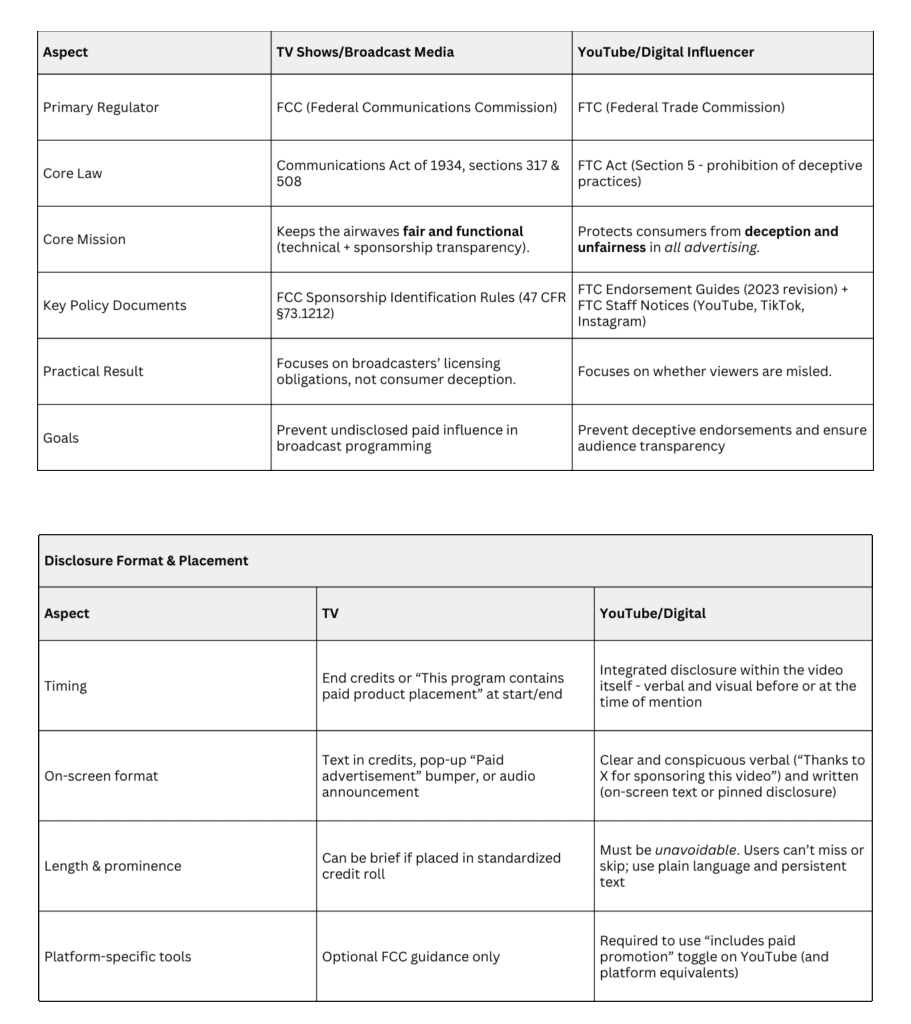
Broadcast and digital media fall under different regulatory bodies with distinct missions and histories.
The FCC regulates the medium, what’s transmitted over public airwaves like TV and radio, while the FTC regulates the message, ensuring advertising and endorsements aren’t false or deceptive.
Because internet-based media doesn’t use licensed airwaves, the FCC has no jurisdiction over platforms like YouTube or Instagram. When online media exploded in the 2010s, Congress kept digital advertising oversight with the FTC.
The FCC’s sponsorship rules date back to the 1940s, when programming and ads were clearly separate – clear commercial breaks, jingles, etc. By contrast, the FTC’s influencer guidelines emerged in the 2000s–2020s, when ads blended into entertainment and social media blurred those lines.
Perception of trust is the key difference. The more personal the communication, the stronger the disclosure must be. When you watch a TV show, it’s understood to be professionally produced and ad-supported. When you watch a YouTuber, it feels like a personal recommendation so if that “friend” is secretly paid, it’s more deceptive. That’s why the FTC requires stronger, more obvious disclosures in digital content.